
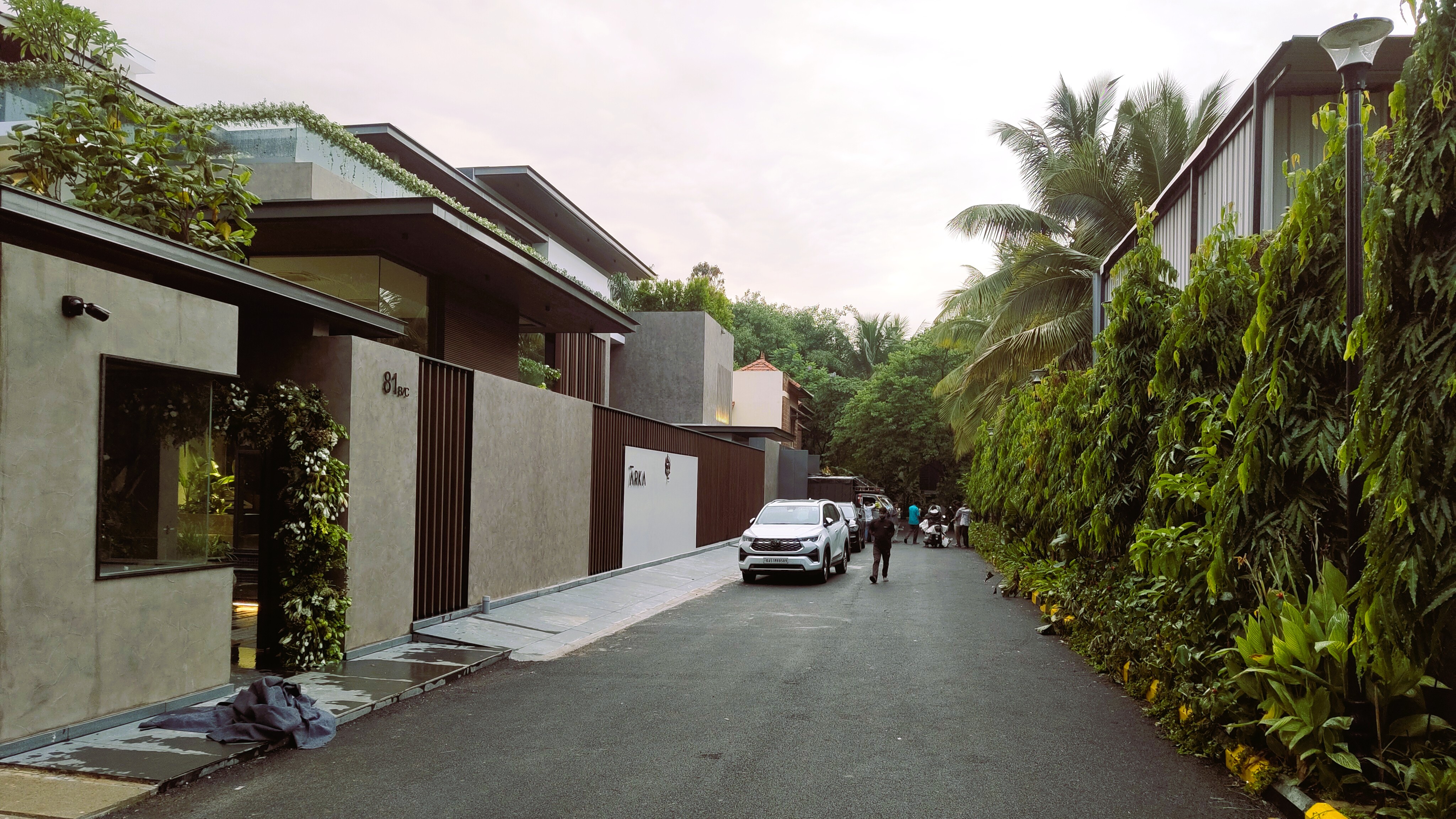
Infrastructure such as roads, paved surfaces, and drainage systems forms the backbone of everyday movement and access. These structures enable communities to function, businesses to operate, and land to remain connected. However, the way this infrastructure is built has long-term consequences for natural resources, particularly water consumption, construction costs, and carbon emissions.
At EcoPath, infrastructure is approached with a clear objective: to deliver reliable, long-lasting outcomes while reducing unnecessary environmental impact. This is achieved through responsible material selection, efficient construction practices, and a lifecycle-based understanding of performance.
This article explains how EcoPath helps clients save water, cost, and carbon emissions, and how these benefits are built into the construction process from the beginning.
The Challenge with Conventional Construction Methods
Traditional construction practices rely heavily on cement-based concrete and standardised approaches that do not always account for long-term impact.
Cement production is one of the largest contributors to global carbon emissions due to the energy-intensive processes involved in its manufacture. In addition, conventional concrete construction consumes large volumes of water during mixing and curing. Over time, infrastructure built this way often requires repeated repairs and resurfacing, leading to further use of materials, fuel, water, and labour.
Each cycle of repair increases environmental impact while also raising long-term costs for owners and operators. While these impacts may not be immediately visible, they accumulate steadily over the lifespan of the infrastructure.
Addressing these challenges requires change at the material and planning stage, not after construction is complete.
Ecopath’s Approach: Reducing Impact at the Source
EcoPath addresses sustainability by focusing on what goes into construction, not just how it looks when finished.
A key part of this approach is the use of eco concrete, a construction material that does not use cement. Since cement is the most carbon-intensive component of traditional concrete, eliminating it significantly reduces embodied carbon.
By using eco concrete, carbon emissions can be reduced by up to 80% compared to conventional cement-based alternatives. This reduction occurs before the infrastructure is even put into use, ensuring that sustainability is embedded at the foundation level.
Rather than relying on offsets alone, EcoPath prioritises direct reduction at the source.
Precast Infrastructure Components and Their Role
Eco concrete is used to manufacture essential precast infrastructure components that support road edges, surface stability, and effective water movement across a site.
These components are fundamental to how infrastructure performs over time. They help define edges, manage surface flow, and protect paved areas from premature damage. Because they are used extensively across projects, the choice of material has a meaningful impact on overall resource consumption and emissions.
By producing these components using low-carbon materials, EcoPath ensures that sustainability benefits extend across the project, not just in isolated areas.
Reducing Water Consumption Through Smarter Construction
Water usage in construction is often underestimated, despite being one of the most heavily consumed resources in the process.
Conventional concrete requires large amounts of water for production and curing. Additional water is used during maintenance and repair work throughout the life of the infrastructure. Over time, this leads to significant water consumption that is rarely accounted for in initial planning.
EcoPath reduces water usage by adopting materials and construction methods that:
-
Require less water during production
-
Reduce or eliminate extensive curing processes
-
Deliver durable outcomes that need fewer repairs
When infrastructure performs consistently over time, the need for repeated water-intensive interventions decreases. This results in water savings that continue throughout the lifecycle of the asset.
Supporting Effective Water Management on Site
Beyond reducing water use, EcoPath’s approach also supports better water management.
Well-designed infrastructure components play a critical role in guiding surface water away from paved areas and preventing damage caused by stagnation or erosion. Effective water management protects underlying layers, reduces stress on surfaces, and improves overall performance.
When water is directed and controlled properly, infrastructure remains stable for longer periods and requires less corrective work. This not only preserves the integrity of the built environment but also reduces long-term resource consumption.
Lowering Costs Over the Infrastructure Lifecycle
Sustainable construction is often perceived as having a higher upfront cost. However, when infrastructure is evaluated across its full lifecycle, a different picture emerges.
EcoPath helps clients reduce long-term costs by:
-
Lowering dependency on high-carbon materials
-
Reducing water use during construction and maintenance
-
Minimising the frequency of repairs and replacements
-
Extending the service life of infrastructure assets
These savings accumulate over time. Reduced maintenance means lower labour costs, less machinery use, and fewer disruptions to operations or access.
Cost efficiency, in this context, is achieved through durability and reduced waste, not by compromising quality.
Fewer Repairs, Lower Carbon Emissions
Every repair cycle involves energy consumption and emissions. Machinery must be deployed, materials must be produced and transported, and work must be carried out on site.
By building infrastructure that is designed to last, EcoPath reduces the need for frequent repairs. This directly lowers emissions associated with maintenance activities across the lifespan of the project.
In this way, durability becomes a key contributor to carbon reduction. Emissions avoided through fewer repairs are just as important as emissions reduced during initial construction.
Carbon Credits and Measurable Environmental Value
As organisations increasingly focus on sustainability and ESG reporting, carbon credits are becoming an important consideration.
Carbon credits represent verified reductions in greenhouse gas emissions. Construction methods that significantly reduce emissions, such as avoiding cement, can potentially be quantified under relevant frameworks, subject to verification and regulatory standards.
For clients, this can support:
-
Environmental and sustainability reporting
-
ESG commitments
-
Long-term carbon accounting strategies
-
Transparent communication of impact
By reducing emissions at the construction stage, clients are better positioned to document and demonstrate measurable environmental value.
Building Infrastructure with Long-Term Responsibility
Infrastructure decisions made today shape environmental and economic outcomes for decades.
By reducing carbon emissions at the material level, conserving water through efficient construction, and lowering long-term costs through durability, EcoPath offers a practical and responsible approach to infrastructure development. Sustainability, in this context, is not an additional feature or a marketing label.
It is the result of informed decisions, careful planning, and responsible execution.