
Sustainability has become a widely used word in construction - and in many ways, that is the problem. It appears in project decks, developer brochures, and regulatory filings, often without any concrete data to back it up. Terms like eco-friendly or green construction have become so broad that they have started to lose meaning. When every new development claims to be sustainable, the word stops functioning as a differentiator and becomes noise.
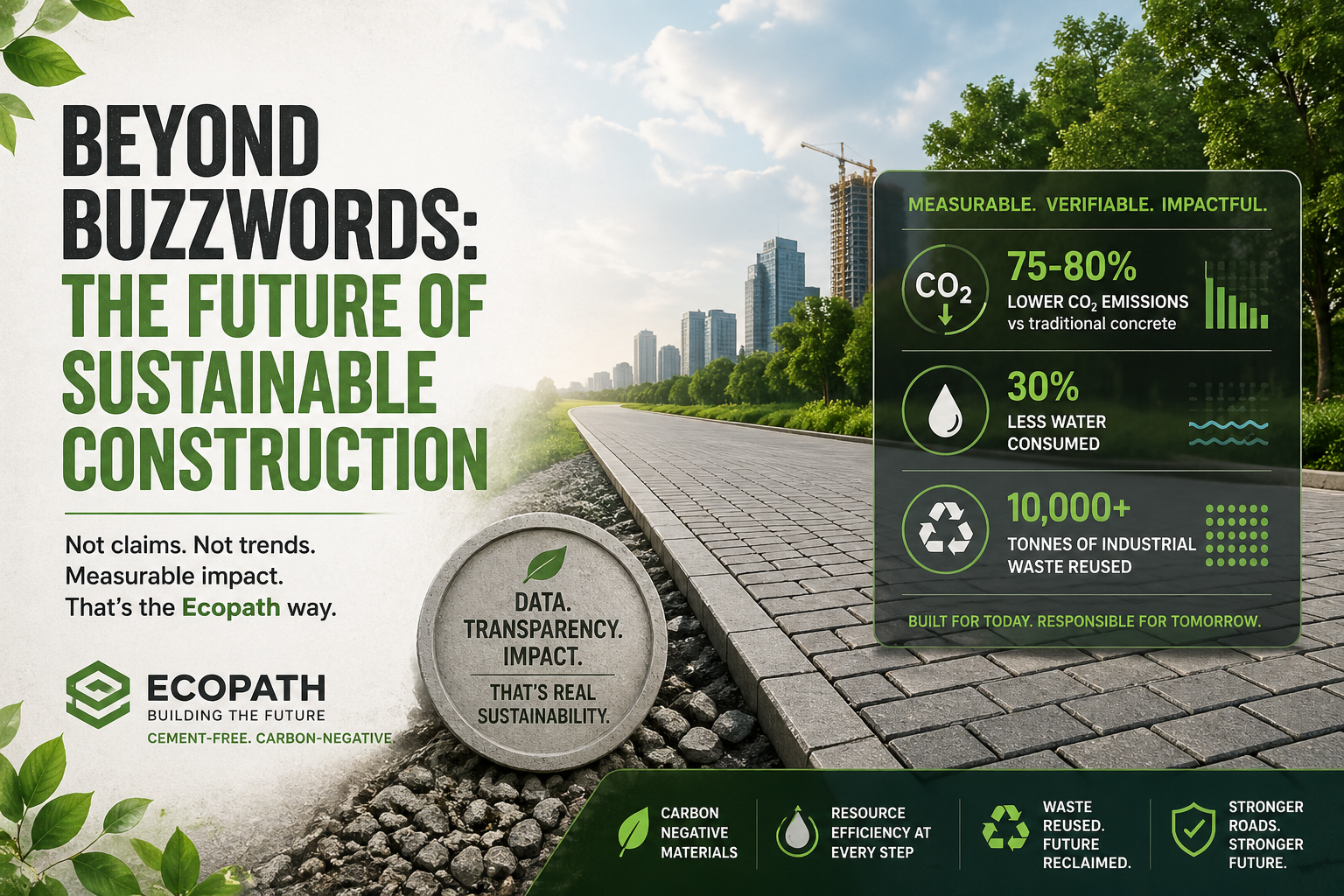
Ecopath takes a more grounded approach by anchoring sustainability to measurable outcomes. Their carbon calculator, built into their product workflow, lets developers see exactly how much CO₂ is being reduced, how much water is being saved, and how much industrial waste is being reused for any given project. Across their materials and methods, they have documented 75 to 80 per cent lower CO₂ emissions compared to traditional concrete, 30 per cent less water consumed during production, and over 10,000 tonnes of industrial waste reused to date. These are not marketing figures; they are engineering outputs.
This level of transparency changes how decisions get made. When sustainability becomes something you can quantify and compare project by project, product by product, it stops being a narrative and becomes a business input. For developers trying to meet ESG requirements, for buyers evaluating a project's long-term value, and for communities living with the consequences of how infrastructure is built, that level of clarity is not just useful, it is overdue. The future of construction will not be defined by who claims to be green. It will be defined by who can prove it.