
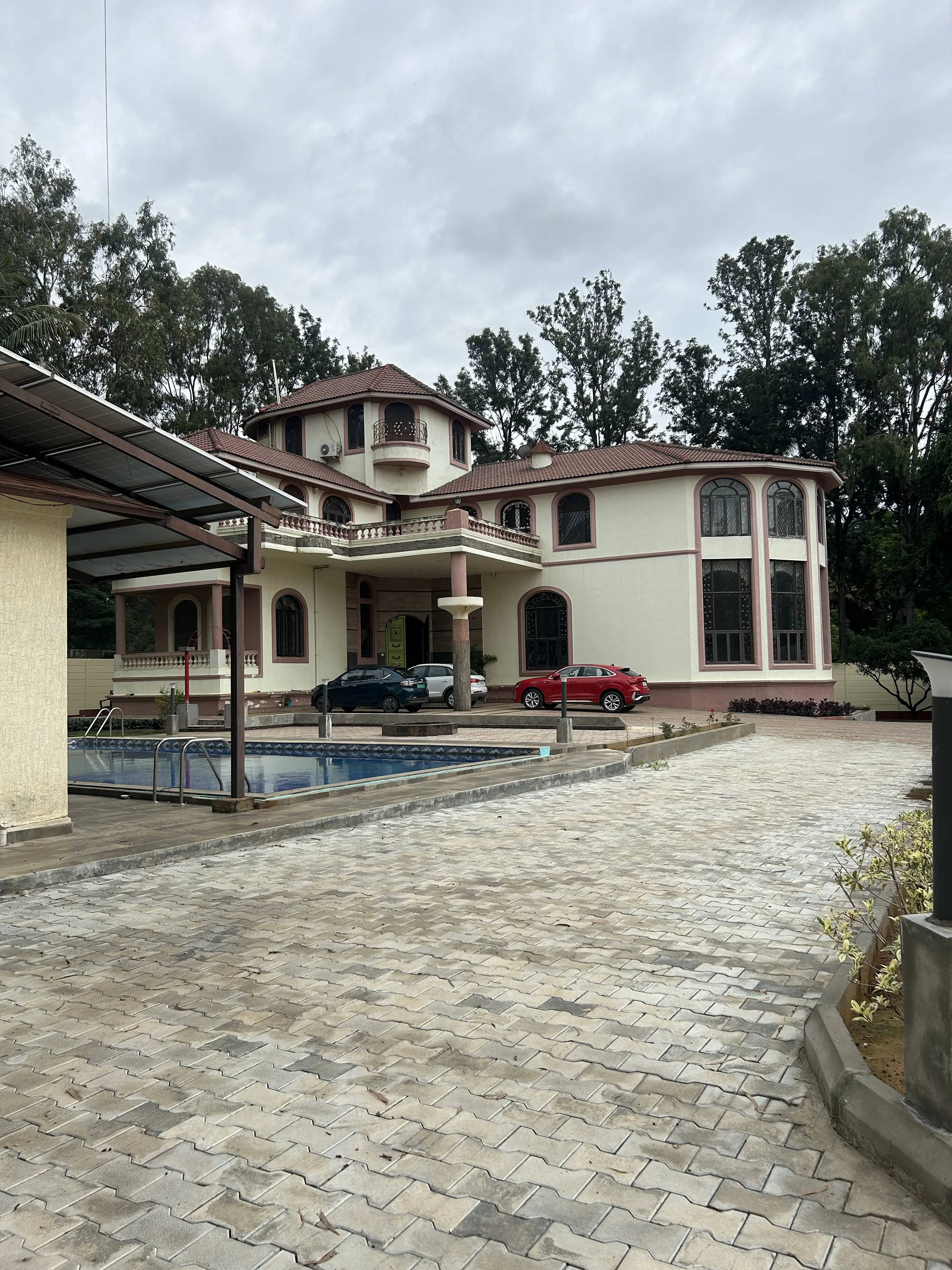
1. Introduction: Where Infrastructure Meets Intention
At CoEvolve Estates in Whitefield, Bangalore, the task at hand was not merely to build an internal road—it was to create infrastructure that aligned with the community’s core values of sustainability, longevity, and mindful design.
This was a road meant to support daily life quietly and reliably, without placing unnecessary strain on the environment. From the outset, the question guiding the project was simple yet powerful:
How can we build a road that lasts—while staying true to the land it rests on?
2. Rethinking the Foundation
2.1 Starting with What Already Exists
Instead of importing large quantities of new material, the approach focused on strengthening the existing soil. A detailed geotechnical study was conducted to understand the soil’s load-bearing capacity, moisture behavior, and compaction needs.
This assessment allowed us to work with the natural ground conditions rather than against them—laying the foundation for a more efficient and sustainable build.
3. Strengthening the Earth, Naturally
3.1 Soil Stabilisation as the Core Strategy
The stabilization phase focused on improving the soil’s structural performance using an earth-friendly, water-based formulation. This treatment transformed the native soil into a durable, load-ready sub-base capable of supporting long-term traffic and weather variations.
The process included:
-
Even spraying of the stabilizing solution
-
Deep blending of treated soil up to 600 mm
-
Precision grading for proper slope and alignment
-
Mechanical compaction using vibratory rollers
The result was a strong, cohesive base—built largely from the soil already present on site.
4. Preparing the Road to Perform Over Time
4.1 Curing for Strength and Balance
After stabilization, the surface was left to cure naturally. This curing period allowed internal bonding to strengthen and moisture levels to stabilize, ensuring the base achieved optimal performance before the final layer was applied.
Regular inspections during this phase ensured uniform drying and surface integrity.
5. A Surface Designed to Protect
5.1 Waterproofing for Longevity
The final layer consisted of a specially formulated waterproof surface designed to resist cracking, erosion, and water seepage. This protective layer acts as a shield—preserving the integrity of the road beneath while offering a smooth and safe driving experience.
By addressing water resistance at the surface level, the road is better equipped to withstand seasonal changes and long-term wear.
6. Quality Checks That Close the Loop
Before handover, the road underwent multiple performance evaluations, including:
-
Surface evenness assessment
-
Water runoff simulations
-
Load testing to assess movement resistance
Each test confirmed that the road met both functional and durability benchmarks, delivering a result that satisfied performance needs without compromising environmental responsibility.
7. Conclusion: Roads Built with Purpose
At CoEvolve Estates, this internal road stands as an example of how thoughtful engineering and sustainable practices can coexist seamlessly. Built by strengthening the earth beneath and protecting the surface above, it reflects a commitment to longevity, efficiency, and mindful development.
Because when infrastructure is built with intention, it doesn’t just serve movement—it supports a way of living, right from the ground up.